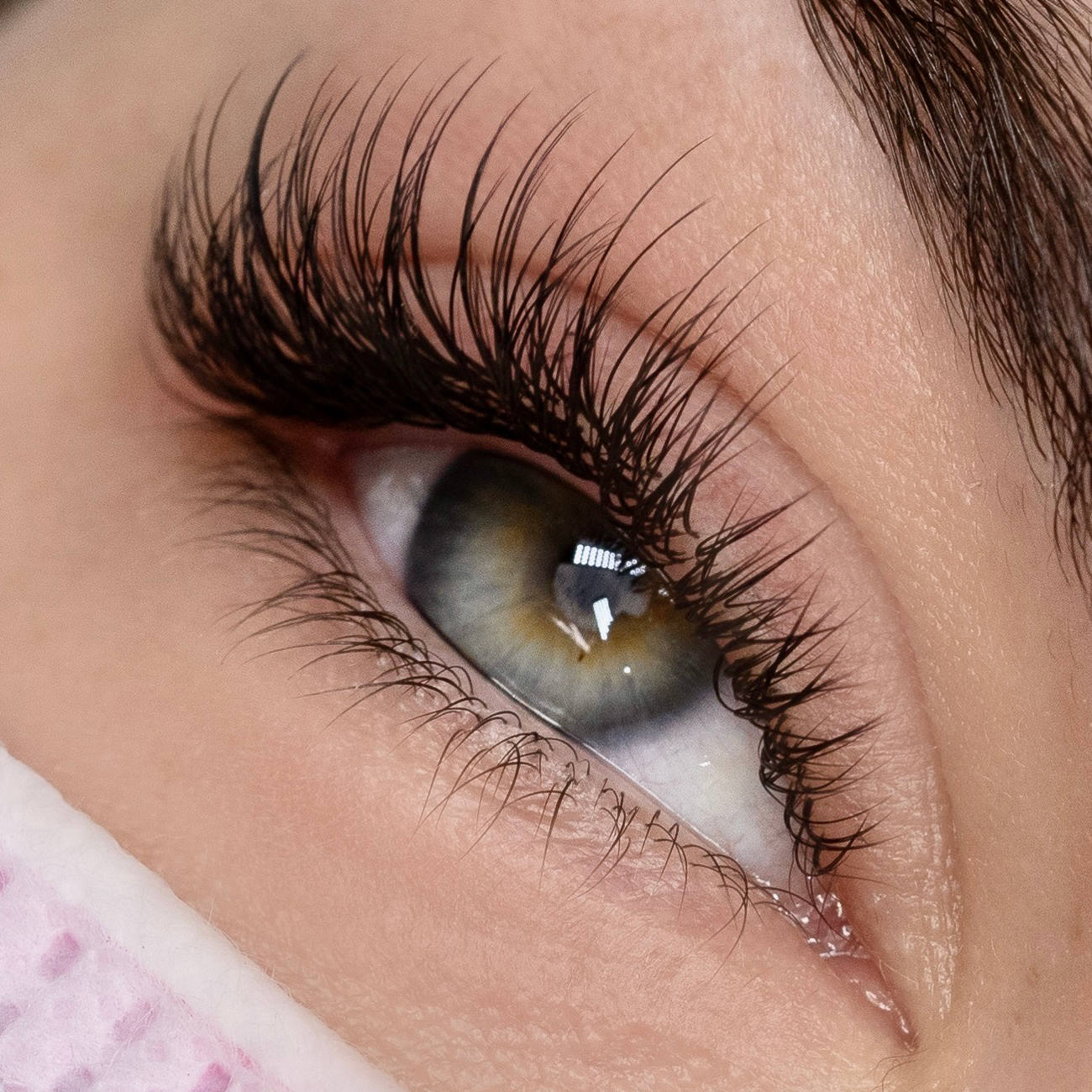


Two clients can leave with identical sets from the same technician on the same afternoon, and one will still look full at week four while the other is booking a new full set at week two. The application was the same. The aftercare was not.
- The first 24 hours decide the adhesive's final strength — keep them dry and steam-free.
- Daily cleansing improves retention. Not cleansing is the most common cause of early loss.
- Oil is the enemy of cyanoacrylate; check your cleanser, your SPF and your eye cream.
- Sleeping position accounts for a surprising share of asymmetric shedding.
How the adhesive actually works
Lash adhesive is a cyanoacrylate. It cures by reacting with moisture in the air, which is why humidity in the treatment room is controlled and why your technician may spray a fine mist at the end of the appointment.
The surface bond forms within seconds — this is what stops the extension moving during application. The full cure, where the polymer reaches its final strength through the depth of the bond, takes considerably longer. For most adhesives that is somewhere between twelve and twenty-four hours.
During that window the bond is vulnerable in a way it will never be again. Excess moisture at the wrong moment causes the surface to cure faster than the interior, a phenomenon called shock curing, which leaves a bond that looks fine and is structurally brittle. It holds for a few days, then fails all at once.
The first 24 hours
- No water on the lashes. Shower with your back to the spray, or wash your hair in the sink.
- No steam. Hot showers, saunas, steam rooms and standing over a boiling pan all count. This is the single most-broken rule.
- No sweating heavily. Skip the workout, or at least the hot yoga.
- No makeup on the eyes. Nothing that needs removing near the lash line.
- No rubbing, ever again ideally, but especially now.
After twenty-four hours the bond is at full strength and the rules relax considerably — with one exception, which is the next section.
Oil, and where it hides
Cyanoacrylate is degraded by oil. Not instantly, but cumulatively: repeated exposure softens the bond until extensions slide off natural lashes that have not shed.
The obvious sources are easy to avoid. The hidden ones are what cost people retention:
- Cleansing balms and oil cleansers — even if you avoid the eye area, the residue travels in the rinse
- Eye creams, most of which are oil-rich by design; switch to a gel formula or apply on the orbital bone only, never up toward the lash line
- Sunscreen, particularly chemical formulas, which are frequently oil-based
- Hair conditioner and masks, which run down the face in the shower
- Micellar water, which sounds gentle but is often bi-phase with an oil layer
- Foundation and concealer with an emollient base, migrating upward over the day
The cleansing routine nobody expects
The instruction most clients are surprised by is that lash extensions need to be washed — daily, deliberately, with a dedicated foaming lash cleanser.
The instinct is the opposite: leave them alone, keep them dry, disturb nothing. But the lash line accumulates sebum, skin cells, makeup residue and, if left long enough, Demodex mites. That accumulation both degrades the adhesive and causes the redness and itching that gets misattributed to an allergy.
The routine takes forty seconds:
- Pump foaming lash cleanser onto a soft lash brush or a clean fingertip
- Work gently along the lash line and through the extensions, in the direction of growth
- Rinse with lukewarm water, letting it run down rather than splashing
- Blot — do not rub — with a lint-free cloth
- Once dry, brush through with a clean spoolie to realign the fans
It is the highest-impact habit on this page and the one most often skipped, because it feels like it should be harmful. It is not. Clean lashes hold better, look better and are far less likely to become irritated.
Sleep, and why one eye always looks worse
If one side is consistently thinner, you are almost certainly a side sleeper on that side.
Eight hours of a pillow pressing against extensions bends them out of alignment and applies steady mechanical stress to the bond. Over a two-week cycle that is more than a hundred hours of pressure on one eye and none on the other.
- A silk or satin pillowcase reduces friction significantly and is the easiest fix
- A contoured sleep mask that vaults over the eye area works well for committed side sleepers
- Sleeping on your back is ideal and almost nobody manages it
Mascara, curlers and the things to stop doing
- Mechanical lash curlers: never. They crimp the extension and can snap the natural lash beneath it. Extensions are chosen with a curl built in, so a curler is redundant as well as damaging.
- Waterproof mascara: never. Removing it requires solvents or friction, and both destroy the bond.
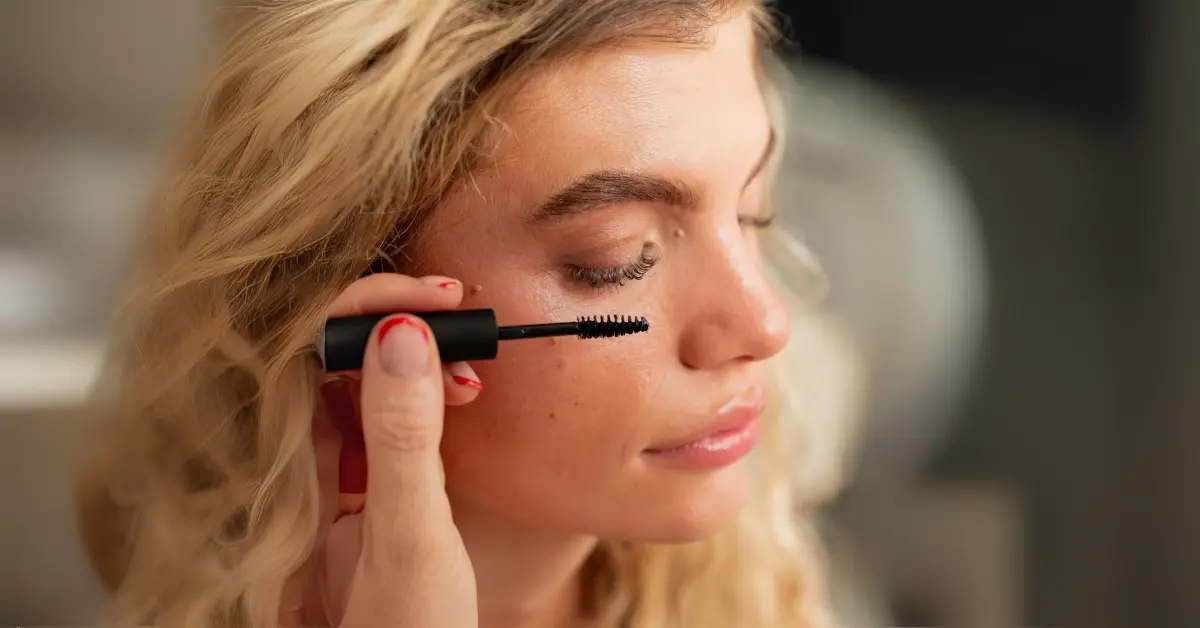
- Mascara at all: on classic sets, a water-based lash-safe formula on the tips only. On volume sets, none — mascara collapses fans permanently.
- Picking or pulling: removing an extension by hand takes the natural lash with it. Repeated over months this causes real thinning, and it is the origin of almost every story about extensions ruining someone's lashes.
- Eyeliner: gel or liquid on the lid is fine; waxy pencil in the waterline migrates into the lash line and softens the bond.
Fills, and knowing when a set is finished
Natural lashes shed on a six-to-eight-week cycle, a few every day, and each extension leaves with its host lash. That is normal and not a sign of a bad set.
A fill at two to three weeks replaces what has gone and keeps the map intact. At four weeks, roughly half the set has usually cycled out and a fill takes almost as long as a new set — which is why most technicians price it as one past that point. Booking your next fill before you leave is the simplest way to stay ahead of it.
Signs it is time regardless of the calendar: gaps visible in the outer third, extensions sitting at visibly different angles, or a set that no longer holds its shape after brushing.
When to stop and call your technician
Some discomfort in the first hours is normal — the sensation of weight, mild dryness. These are not:
- Swelling of the lid or under-eye, particularly if it develops over several hours
- Persistent stinging, watering or light sensitivity beyond the first day
- Redness along the lash line that does not settle with cleansing
- A sensation of pulling on individual lashes, which usually means two lashes have been stuck together and needs correcting rather than enduring
None of these should be waited out. Adhesive reactions can develop after several uneventful sets, so a history of tolerating extensions is not a guarantee.
Questions we get asked
After the first 24 hours, yes. Rinse with fresh water afterwards — chlorine and salt both leave deposits along the lash line — and cleanse properly the same evening.
Look for a change in products before you blame the application. A new SPF, a new eye cream or a switch to an oil cleanser is the usual culprit.
Not for lash health if aftercare has been good — lashes shed and regrow on their own cycle regardless. A break is worth it if the lash line has become irritated, to let the skin recover.
Book at the studio in West Palm Beach and we will work through it in person — including the parts that are easier to show than to describe. Call (323) 994-4225 or request an appointment.