

Ask ten people what a Russian manicure is and you will get ten answers, most of them wrong. It is not a nail shape, not a colour trend, and not simply an expensive manicure. It is a specific technique — dry, e-file based, and built around one idea: expose the true cuticle line, then finish the product flush to it.
- It is a dry technique — no water soaking, which is what makes the difference visible.
- The e-file removes non-living tissue only. Living skin is never filed.
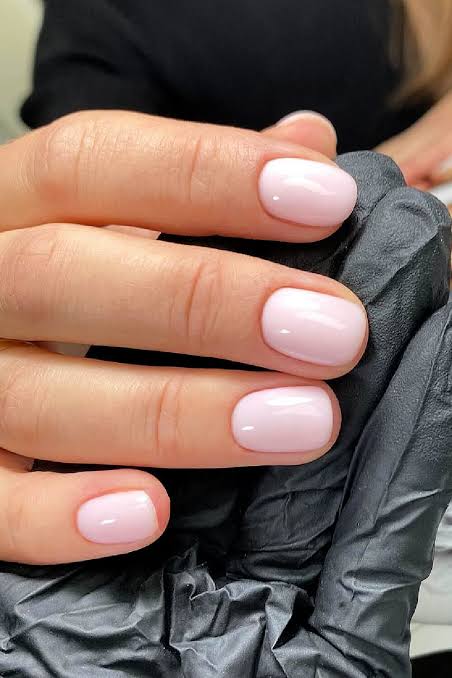
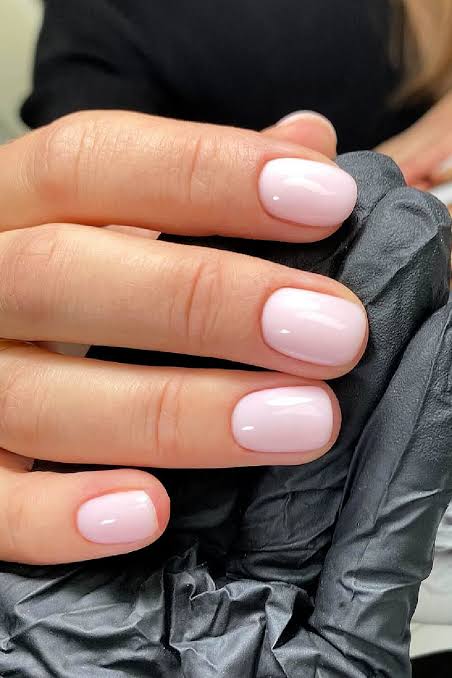
- Product finishing flush to the skin is why grow-out stays invisible for three to four weeks.
- Safety depends almost entirely on the technician's bit selection, speed and pressure control.
Where the technique came from
The method spread out of Eastern European nail schools in the 2000s, where electric files were standard equipment long before they became common in American salons. The teaching there treats the cuticle area as a structure to be understood rather than a nuisance to be trimmed: the eponychium (the living fold of skin), the cuticle proper (the thin layer of dead tissue that the eponychium sheds onto the nail plate), and the pterygium (dead tissue that has migrated further up the plate and adhered to it).
A conventional wet manicure treats all three as one thing, softens them in water, and cuts. A Russian manicure treats them as three separate things, works dry so the boundaries stay visible, and removes only the two that are already dead.
Why the technique is dry
This is the part clients find counterintuitive. Water is soothing and traditional, so its absence feels like a shortcut. It is the opposite.
Soaking swells the skin around the nail and softens the cuticle until it becomes indistinguishable from living tissue. Under that condition, a technician cannot see where dead ends and living begins — so nippers either cut too timidly, leaving pterygium behind, or too far, catching living skin and creating the hangnail that appears three days later.
Water also has a second, purely chemical consequence. The nail plate is hygroscopic: it absorbs moisture and expands. Apply gel to a swollen plate and it cures at that size. As the plate dries and contracts over the following hours, the cured product no longer fits it, and micro-separation begins at the edges. This is the single most common cause of gel lifting within the first week, and it is entirely avoidable.
What actually happens in the appointment
The sequence is consistent, and it is worth knowing so you can recognise a technician working correctly.
- Dry assessment. Hands are examined without any soaking. The technician looks at the shape of the fold, the amount of pterygium, the condition of the free edge and any splits or lifting from previous product.
- Old product removal. If gel is present, it is filed back rather than soaked off wherever possible, which preserves the natural plate.
- Cuticle work. A fine ceramic or diamond bit, run at a controlled speed, lifts the fold and cleans the dead tissue from the plate underneath. Pressure is light and the bit is always moving — a bit held still in one place is what generates heat and damage.
- Shaping. The free edge is shaped to the requested silhouette, with sidewalls kept straight so the shape holds as the nail grows.
- Buffing and dehydration. A very light buff to break the shine, then a dehydrator and primer appropriate to the product going on.
- Application. Base coat worked right up to — not onto — the skin, then colour or builder gel in thin layers, each cured fully.
- Finish and aftercare. Top coat, cure, cleanse of the tacky layer, then cuticle oil and a short briefing on the first 24 hours.
The bits, and why they matter
The e-file itself is unremarkable; the bits are where the skill lives. A technician typically works through several during one appointment.
| Bit | Typical use | Why it matters |
|---|---|---|
| Fine ceramic flame | Lifting the fold, cleaning pterygium | Low aggression, generates little heat, forgiving on skin contact |
| Diamond ball (small) | Detail work in the sidewalls | Reaches the corners a flame bit cannot |
| Diamond cone | Under the free edge, sidewall cleanup | Precision without flattening the natural curve |
| Carbide barrel | Removing old gel | Fast, and dangerous in the wrong hands — should never touch the natural plate |
| Soft buffer bit | Final surface prep | Breaks shine without thinning the plate |
Speed is typically 8,000–15,000 RPM for cuticle work; higher belongs to product removal, not skin-adjacent work. If you ever feel a sharp sting or sudden heat, that is a signal to speak up immediately — not a normal part of the process.
Why it lasts longer — the mechanical explanation
Longevity comes from two entirely physical facts, not from a superior product.
Adhesion. Gel bonds to a clean, dry, dehydrated plate. A dry manicure delivers exactly that. A wet manicure delivers a plate that has absorbed water and, often, a residue of cuticle remover and oil. Adhesion is measurably worse, and lifting starts at the point of weakest bond.
Geometry. When colour stops a millimetre short of the skin — as it must in a wet manicure, because the swollen fold hides where the plate really begins — that gap becomes visible within days as the nail grows. Worse, the thickened edge of product where it stops creates a ledge. Ledges catch. Caught product lifts, and lifting spreads.
Finish the product flush to the skin on a clean line and there is no gap to become visible and no ledge to catch. In practice this is the difference between a manicure that looks grown out at day ten and one that still looks intentional at day twenty-five.
The honest risks
Any technique that puts a rotating abrasive next to living tissue carries risk, and it would be dishonest to pretend otherwise. The realistic failure modes are:
- Over-thinning the plate. Caused by using an aggressive bit on the nail surface, or by holding a bit still. Results in a nail that feels flexible, tender to pressure and prone to splitting. It grows out, but slowly.
- Heat damage. Friction transfers to the nail bed. Uncomfortable warmth is the warning; sharp heat is already too late.
- Cutting living skin. Produces bleeding, and any break in the skin near the nail is a genuine infection route.
- Cross-contamination. The real danger, and the one clients most often forget to check. Bits are reused between clients — they must be washed, ultrasonically cleaned and autoclaved in sealed pouches.
Ask three questions before you sit down: Where do your bits go after my appointment? Can I see the pouch being opened? What do you do if I say something feels hot? A trained technician will answer all three without hesitation and will be pleased you asked. Anyone who is vague, defensive or dismissive has told you what you need to know.
Who it suits — and who it does not
The technique suits most people, and it is especially good for anyone whose gel has historically lifted early, anyone with a pronounced cuticle fold, and anyone who wants three-plus weeks between appointments.
It is not appropriate, or should wait, if you have an active infection (paronychia, fungal involvement), a psoriatic or eczematous flare in the nail fold, an unhealed injury to the plate, or if you are taking a medication that thins the skin significantly. Uncontrolled diabetes or peripheral neuropathy is a reason to speak to your physician first, because reduced sensation removes the warning system that keeps the process safe.
Aftercare that actually changes the outcome
- Cuticle oil, daily, indefinitely. This is the single highest-return habit. Oil keeps the fold supple, which keeps the line clean and makes the next appointment shorter and more comfortable.
- Gloves for cleaning. Household detergents and repeated hot water do more damage to product edges than anything else in normal life.
- Do not pick. A lifted edge peeled off takes layers of natural plate with it. If something lifts, book a repair.
- Rebook at three to four weeks. Past four, regrowth changes the balance point of the nail and increases the chance of catching and breaking.
Questions we get asked
If you value the extra one to two weeks of clean appearance and you have had trouble with early lifting, yes. If you change colour weekly anyway, a standard manicure serves you just as well.
No. Correctly performed you feel light vibration and mild warmth. Sharp heat or a sting means something is wrong and you should say so at that moment.
Usually yes, and builder gel over a Russian prep is one of the more effective ways to break a biting habit. Active infection needs to heal first.
Book at the studio in West Palm Beach and we will work through it in person — including the parts that are easier to show than to describe. Call (323) 994-4225 or request an appointment.