

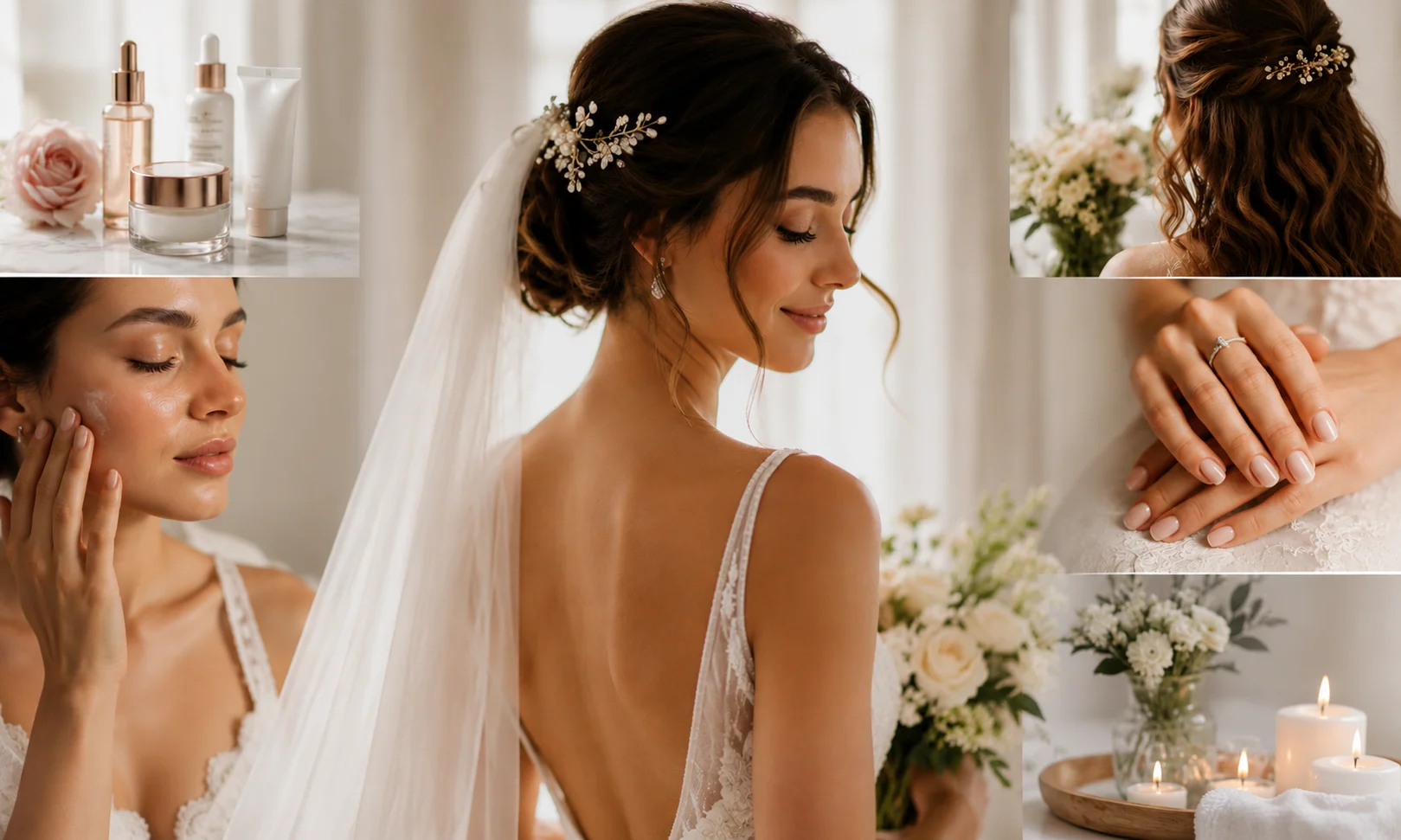
Wedding beauty fails in two ways. Either the look is wrong — decided in a rush, tested once, in the wrong light — or the morning is wrong, and a schedule that looked fine on paper collapses because nobody counted the hair. This is the twelve-week plan that prevents both.
- Book the artist before you book the trial; peak-season Palm Beach dates go 6–12 months out.
- The trial belongs at 10–12 weeks, not the week before — you need time to change your mind.
- Never start a new skincare active inside six weeks of the date.
- Build the wedding-morning schedule backwards from the photographer, with a buffer before the bride.
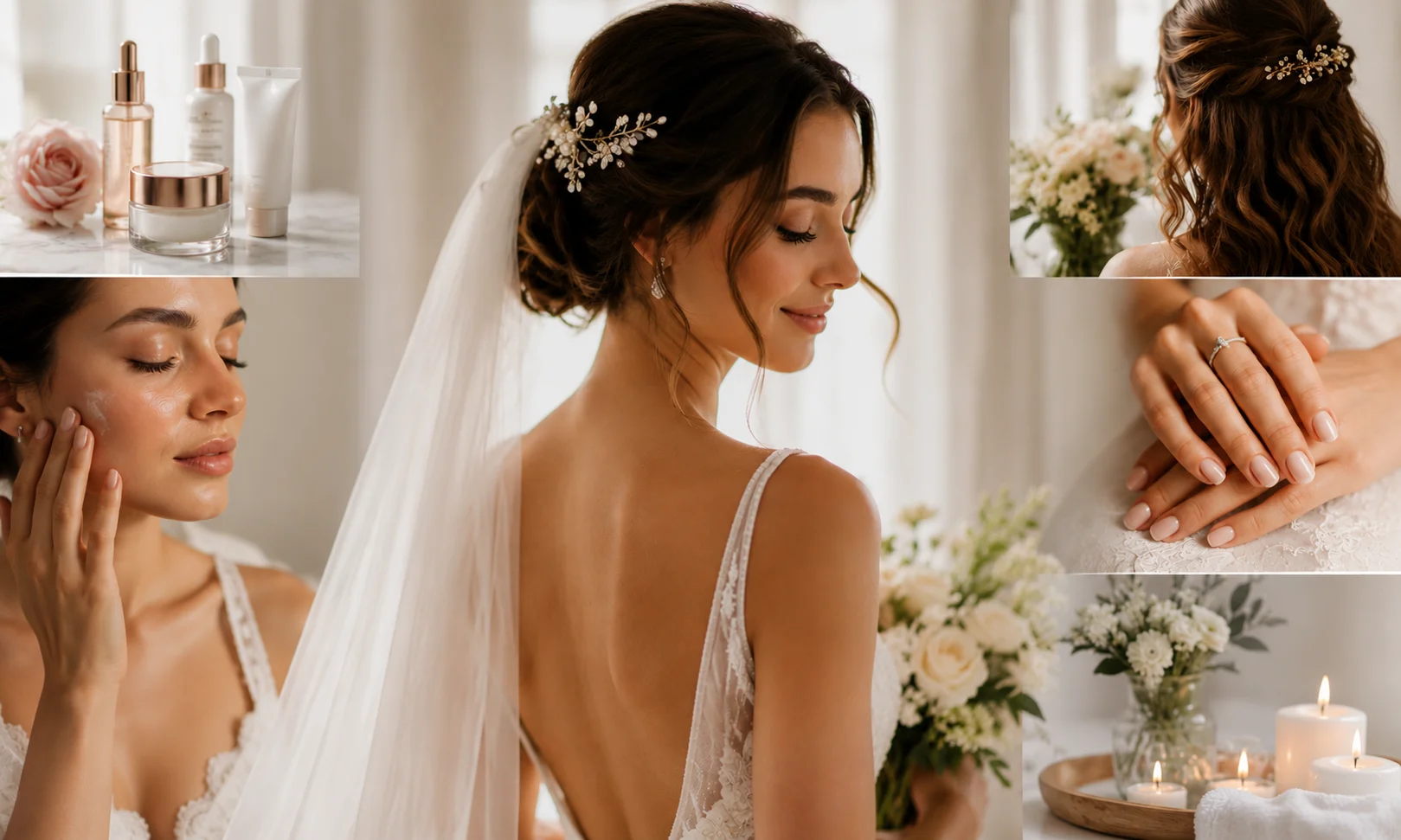
Twelve weeks out — lock the people
Before anything creative happens, the logistics have to be settled. In Palm Beach County the wedding season runs November through April, and artists who work solo take a limited number of dates. If your date falls in that window, availability — not preference — will decide your shortlist unless you move early.
- Confirm the artist and the number of people needing services. Ten faces and ten heads is a very different morning from four.
- Share your venue, your photographer's name and, if known, the first-look or ceremony time. Everything else works backwards from that.
- Ask directly whether a second artist will be needed. Solo artists can typically handle six to eight faces in a morning; beyond that, an assistant is not a luxury.
- Book the trial now, for roughly ten weeks out.
Ten to twelve weeks — the trial
A trial is ninety minutes and it is not a rehearsal you sit through passively. Bring:
- Five to eight reference images — including two you dislike, which are often more informative than the ones you love
- A photograph of the dress, especially the neckline, and a note on the metal tones in your jewellery
- Your own foundation if you have one you like, so undertone can be discussed against a known reference
- Any history of reactions, sensitivity or skin conditions
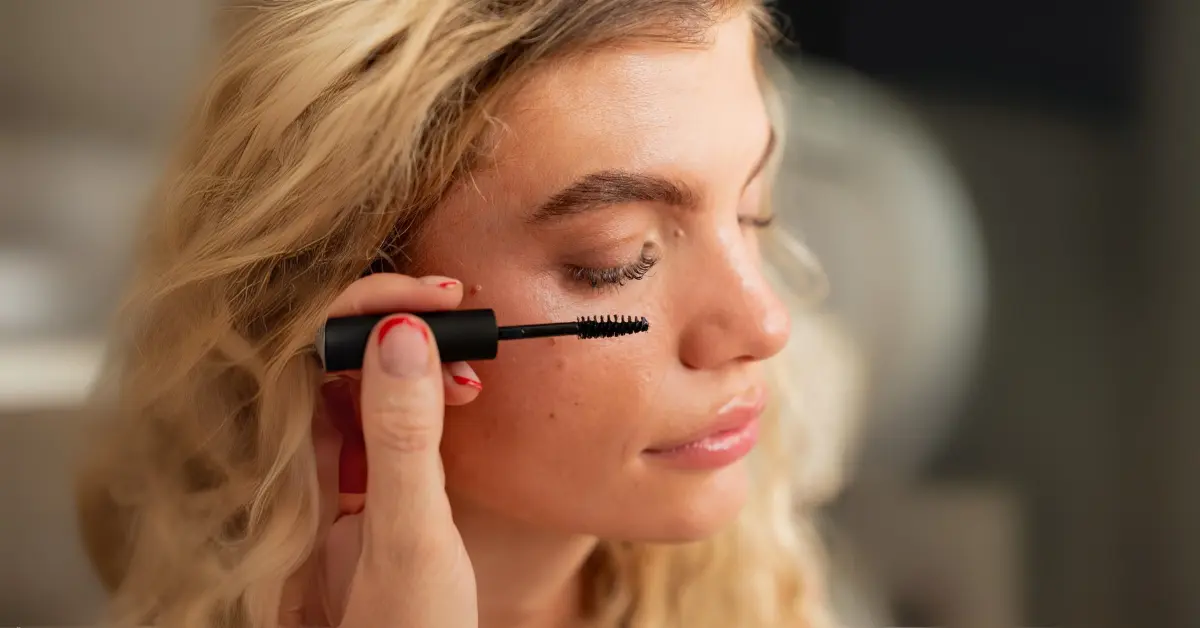
Two things separate a useful trial from a decorative one. First, it should be photographed — with flash and without, indoors and in daylight — because your wedding will be photographed and makeup that reads beautifully in a mirror can read flat or ashy under a flash. Second, you should go about your day afterwards. Eight hours of real wear tells you what a mirror cannot: whether it creases, whether it slides, whether you keep touching your face.
A trial on a Saturday with dinner afterwards gives you a genuine wear test and a second opinion from people who know your face. A trial on a Tuesday morning that you wash off at noon tells you very little.
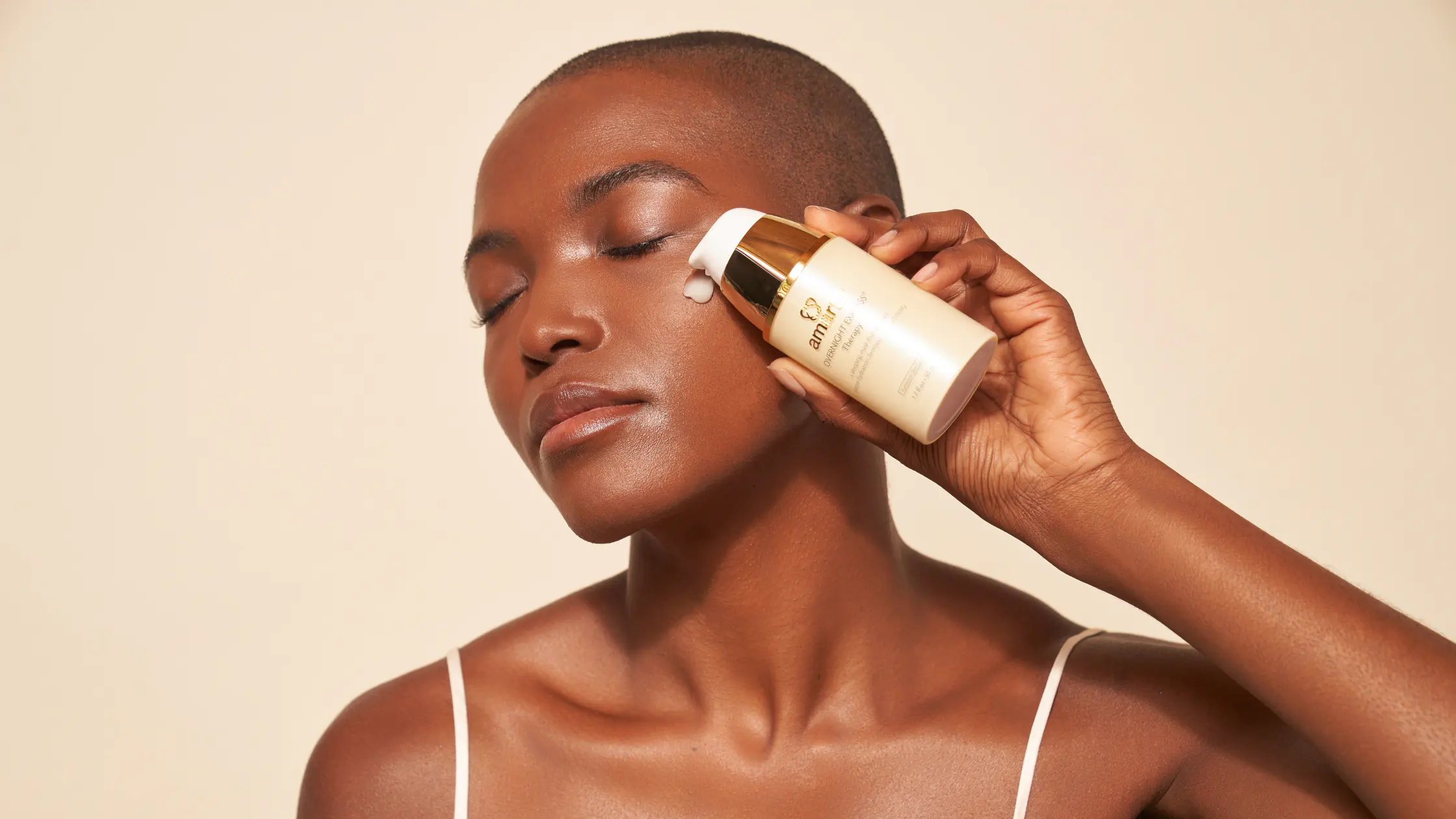
Eight weeks — skin, and the rule about actives
Whatever you are going to do to your skin, start it now or do not start it at all.
Retinoids, acids, new prescriptions, professional peels and microneedling all have a purging or recovery phase, and that phase is unpredictable in length. Eight weeks gives it room. Six weeks is the absolute floor. Inside four weeks the honest advice is to change nothing at all — a wedding is a bad place to discover that your skin has an opinion about mandelic acid.
- Facials: monthly is fine, with the last one no closer than three weeks before the date
- Extractions: not inside two weeks
- Injectables: minimum four weeks, ideally six, so swelling and asymmetry settle
- New cleanser, moisturiser or SPF: only if there is a reason, and only before this point
Six weeks — hair, lashes and nails take shape
Hair colour wants to be done at four to six weeks out, not the week of. Fresh colour looks fresh; colour that has settled for a fortnight photographs more naturally and has had time for a correcting gloss if the tone came out wrong.
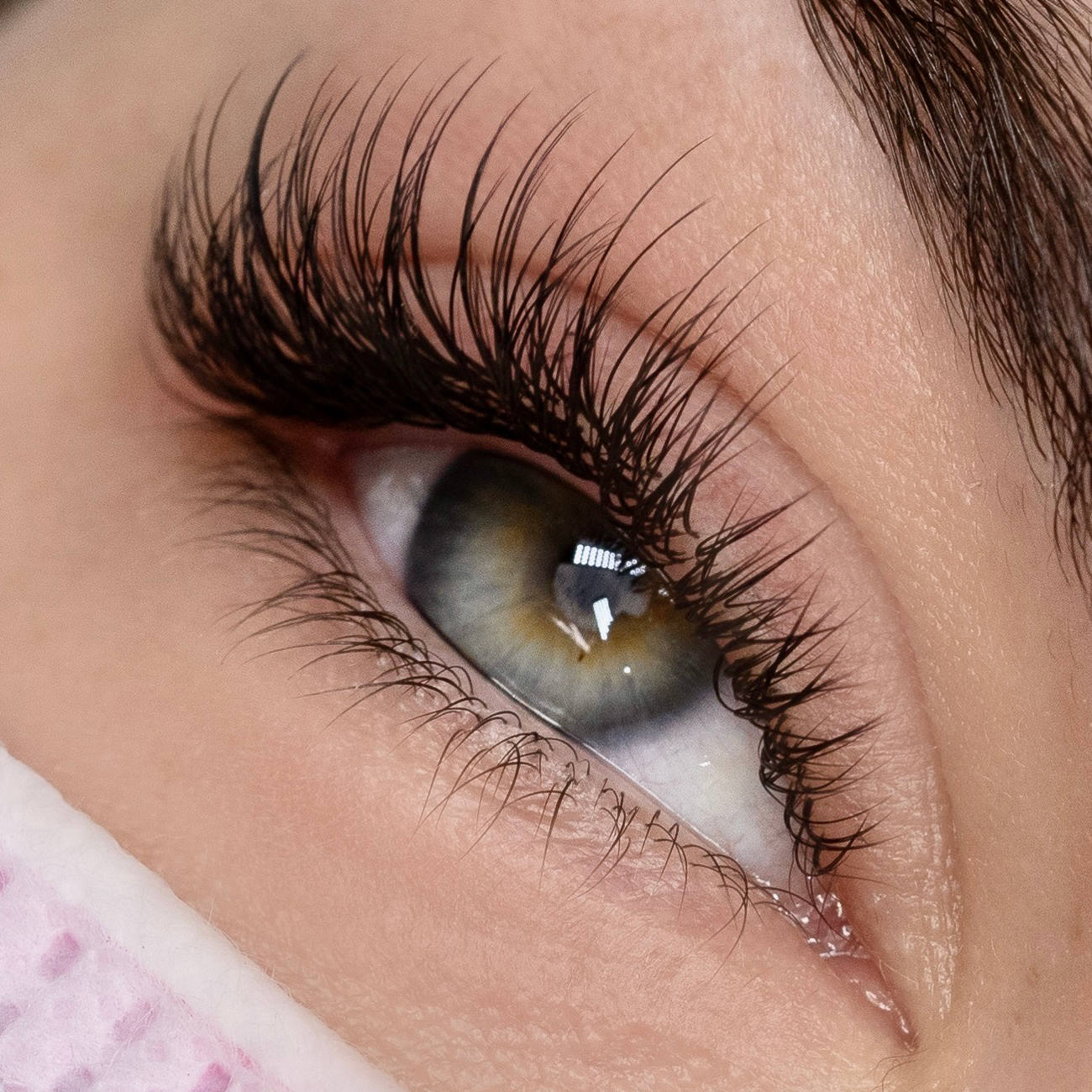
Lash extensions, if you want them, need a full set now so you can live with them. If you have never had extensions, this is also when a patch test happens — a reaction discovered six weeks out is an inconvenience; one discovered on the morning is a catastrophe.
Brows should be shaped now and then left largely alone. If you want lamination, do it now once so you know how your brows respond, and again ten days before the wedding.
Nails — decide the shape now and grow into it. A length that feels dramatic today feels normal in six weeks, which is exactly what you want in the ring photographs.
Four weeks — the second trial, if you need one
Most brides need one trial. You need a second if any of these are true: you changed the dress, you changed the hair length or colour significantly, you disliked something specific and want to see the fix, or the first trial happened before you had the veil.
A second trial is shorter, because it is an adjustment rather than an exploration. Bring the photographs from the first one and be specific: lighter on the contour, warmer lip, less lash on the inner corner. Vague dissatisfaction is hard to act on; specific notes are easy.
Two weeks — the schedule gets written
This is where most weddings quietly go wrong, and where a written schedule saves the morning.
The schedule is built backwards from one fixed point: the time your photographer needs you ready. Everything else is subtracted from that.
| Time | Who | What |
|---|---|---|
| 07:30 | Artist arrives | Sets up, checks lighting and power |
| 07:45 | Bridesmaid 1 | Hair |
| 08:15 | Bridesmaid 1 / Bridesmaid 2 | Makeup / Hair |
| 08:45 | Bridesmaid 2 / Bridesmaid 3 | Makeup / Hair |
| 09:15 | Bridesmaid 3 / Mother of the bride | Makeup / Hair |
| 09:45 | Mother of the bride | Makeup |
| 10:15 | Buffer | Deliberately empty |
| 10:30 | Bride | Hair |
| 11:15 | Bride | Makeup |
| 12:15 | Bride | Dress, final check, photographs |
Three principles hold it together. Hair and makeup alternate so no one waits idle. The bride goes last so her makeup is the freshest in the room. And there is a fifteen-minute buffer immediately before the bride, because a bridesmaid will be in the shower when she should be in the chair, and that delay must not land on you.
The week of
- Seven days: final brow shape, lash fill, gel manicure and pedicure. Nothing experimental.
- Five days: stop trying new products entirely, including anything in a hotel bathroom.
- Three days: drink more water than feels necessary and cut back on alcohol and salt — both show in the under-eye area.
- Two days: a gentle hydrating mask, nothing exfoliating.
- The night before: cleanse, moisturise, sleep. Resist the urge to do anything else to your face.
The morning itself
Small logistics that repeatedly decide how smoothly it goes:
- Wear a button-through or zip top. Nothing goes over your head after hair and makeup.
- Get the room right: a table by a window, a power outlet, and a space that is not also the changing room. Overhead hotel lighting alone is not enough, but an artist brings their own.
- Eat something. A morning of prosecco and no breakfast is visible in the photographs by three o'clock.
- Nominate one person — not the bride — to answer the door and the phone.
- Keep a small kit for the day: your lipstick, blotting papers, a few cotton buds and a mini setting spray. That is all you need for eight hours.
For an outdoor ceremony in a Florida summer, having the artist stay through the ceremony and formal photographs is the difference between a beautiful first hour and a beautiful album. It is charged hourly and it is usually the best money in the beauty budget.
Questions we get asked
One is normal and enough for the majority. A second is worth it if the dress, hair or your mind changed significantly after the first.
Not usually. A short pre-wedding consultation covering preferences and any sensitivities is enough, and it keeps the budget where it matters.
Nothing changes about the makeup — long-wear layering is built for the worse case. Hair may need a small adjustment on the day, which is what the buffer is for.
Book at the studio in West Palm Beach and we will work through it in person — including the parts that are easier to show than to describe. Call (323) 994-4225 or request an appointment.