

Three services, constantly used as if they were synonyms, doing three different things to the hair shaft. Booking the wrong one wastes an appointment and leaves the actual problem untouched — so here is what each one is, mechanically, and how to tell which you need.
- Gloss adds shine and can gently shift tone; it is a demi-permanent service.
- Toner neutralises unwanted pigment after lightening; it is corrective, not decorative.
- Glaze is a temporary surface coating — shine only, no meaningful colour change.
- Dull is a gloss problem. Brassy is a toner problem. They are not the same complaint.
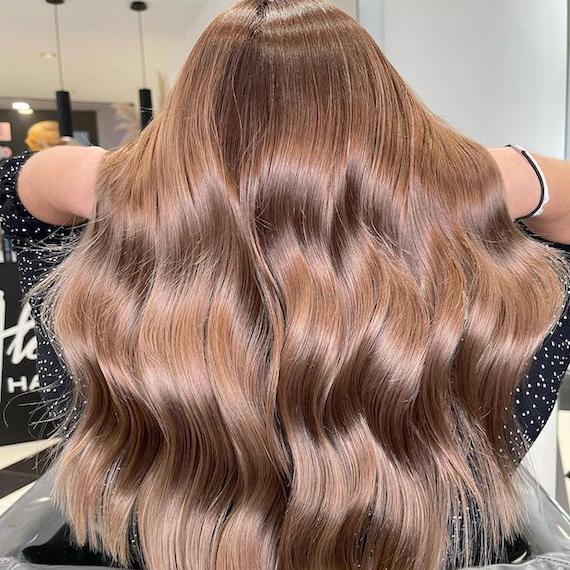
Gloss: a demi-permanent shine and tone service
A gloss is typically a demi-permanent colour mixed with a low-volume developer. That developer opens the cuticle slightly — just enough for small dye molecules to sit within the outer layers of the cortex rather than merely on the surface.
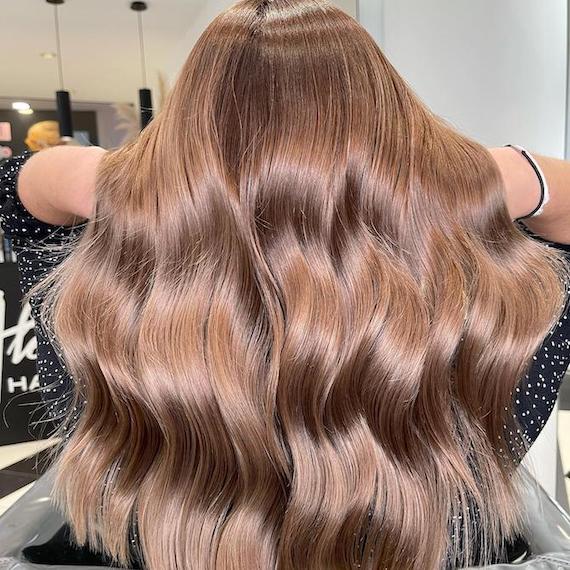
Two things follow from that. First, the cuticle is smoothed and sealed as the service finishes, which is where the shine comes from: a flat cuticle reflects light coherently, a raised one scatters it. Second, because the pigment is inside rather than on top, the effect survives washing for four to six weeks and fades gradually rather than vanishing.
Book a gloss when: your colour looks flat or faded, you want to refresh tone between full colour appointments, or you want a subtle shift — half a shade warmer, half a shade cooler — without commitment.
Toner: a corrective service
Toner is not a shine treatment that happens to change colour. It is a colour correction that happens to add some shine.
When hair is lightened, the process removes pigment in a predictable order. Blue goes first, then red, and yellow last — which is why lightened hair passes through orange and lands on yellow. That residual warmth is what people mean by brassy.
Toner works on the colour wheel: violet neutralises yellow, blue neutralises orange, green neutralises red. A toner is therefore chosen for the specific unwanted tone in your hair, which is why a toner that worked beautifully on a friend can look grey or muddy on you.
Book a toner when: your blonde has gone yellow or orange, your balayage has warmed up over the summer, or a highlight has grown brassy while the base has not.
It deposits a small amount of violet on the surface and helps maintain a toner between appointments. Used too often it builds up and leaves a dull lilac cast, particularly on porous ends. Twice a week is plenty for most people.
Glaze: temporary and surface-level
A glaze is a clear or lightly tinted treatment applied without developer. Nothing opens, nothing penetrates. It coats the hair with a film that flattens the cuticle and reflects light.
The result is genuine and immediate shine that lasts one to three weeks, or roughly four to six washes. It cannot correct tone in any meaningful way, and a tinted glaze shifts colour only very slightly and only on porous hair.
Book a glaze when: you want shine before an event, your colour is correct but the finish is dull, or you want something with no chemical commitment at all.
Side by side
| Gloss | Toner | Glaze | |
|---|---|---|---|
| Developer used | Low volume | Low volume | None |
| Where it acts | Outer cortex | Outer cortex | Surface only |
| Changes tone | Subtly | Corrective, targeted | Barely |
| Adds shine | Yes | Some | Yes, most of all |
| Lasts | 4–6 weeks | 4–6 weeks | 1–3 weeks |
| Typical time | 40–50 min | 30–45 min | 20–30 min |
| Best for | Faded, flat colour | Brassy blonde | Event shine |
What these services cannot do
- None of them lighten. Demi-permanent formulas without a strong developer cannot lift pigment. Going lighter requires a lightening service.
- None of them repair damage. Shine can make damaged hair look considerably better, which is not the same as improving its structure. Structural repair means a bond-building treatment.
- None of them fix a bad cut. Split ends still scatter light no matter how flat the cuticle above them is.
- Toner cannot fix orange in one appointment if the hair was not lifted far enough. Toning orange with blue on under-lifted hair produces a muddy result; the honest answer is more lifting first.
Making the result last on the coast
Everything on this page fades faster in South Florida than in a temperate climate, for reasons worth understanding.
- UV degrades both natural melanin and deposited dye; it is the largest single factor in colour fade here. A leave-in with UV filters is the most effective countermeasure.
- Chlorine and salt water both raise the cuticle, which accelerates loss of deposited pigment. Saturating hair with fresh water before swimming means it absorbs far less of either.
- Hot water opens the cuticle every wash. Lukewarm and a cool final rinse make a visible difference over a month.
- Sulphate-free shampoo matters more for glossed and toned hair than for virgin hair, because it is the deposited pigment that gets stripped first.
- Heat styling above 180°C without a protectant undoes a gloss faster than almost anything else.
A simple decision path
- Is the colour wrong — yellow, orange, too warm? → Toner
- Is the colour right but flat, faded or lifeless? → Gloss
- Is the colour right, the condition fine, and you have an event on Saturday? → Glaze
- Is the hair snapping, gummy or rough to the touch? → Bond treatment first, colour services after
- Do you want to be lighter? → None of the above; that is a lightening appointment
If you are unsure, describe the problem rather than naming a service when you book. "My blonde has gone yellow at the ends" gets you the right appointment; "I'd like a gloss" might not.
Questions we get asked
Every four to six weeks is comfortable for most people. It is a gentle service, but it is not entirely without chemistry, so there is no benefit in going more often than the fade.
It blends grey and softens the contrast, and on scattered grey the effect can be very convincing. For full opaque coverage you need permanent colour.
At-home glosses exist and are reasonably safe. Toner is where home attempts most often go wrong, because choosing the neutralising tone requires reading what is actually in the hair — and over-toned hair takes weeks to recover.
Book at the studio in West Palm Beach and we will work through it in person — including the parts that are easier to show than to describe. Call (323) 994-4225 or request an appointment.